
Today, I invite you to learn about the work of the Chilean Society of School Health Nursing, known as SOCHIESE, which, with more than 30 years of history, has been contributing a fresh, collaborative, and deeply human perspective to the health of children and adolescents in our country.
This article is an invitation to discover how school nursing goes beyond the traditional caregiving role to become a vital bridge between health and education, creating healthy, equitable school communities with greater social well-being. We will also discuss landmark initiatives such as the law mandating sixty minutes of daily physical activity, the recent redefinition of the nursing role globally, and how SOCHIESE positions itself as a key player in these transformations.
Table of Contents
- What is SOCHIESE and How Does It Contribute to School Health in Chile?
- The History and Growth of School Nursing in Chile
- The Sixty-Minute Law: More Than Just an Hour of Physical Education
- Redefining the Role of Nursing Globally: Implications for School Health in Chile
- SOCHIESE’s Featured Projects and Activities: From Cardioprotection to Continuing Education
- A Call to Nurses: Building Chilean School Health Together
- Conclusion: School Health in Chile on the Move
- Frequently Asked Questions (FAQ)
What is SOCHIESE and How Does It Contribute to School Health in Chile?
SOCHIESE is a network of nurses spread throughout Chile, united by a passion for and commitment to school health. Founded in 1995 by nurses working primarily in schools in Santiago, this community has grown to include eighty-four members today, drawn not only from schools and primary care settings but also from academia and universities, where continuing education in school health is promoted.
In an interview with Nuri Sadá Aznar, President of the Chilean Society of School Health Nursing (SOCHIESE), she tells us more about the organization’s mission and activities:
SOCHIESE, or the Chilean Society of School Health Nursing, is an organization that brings together nurses from across Chile with a common interest: improving the health of children and adolescents within the school environment. The society has been working tirelessly for over thirty years to advise schools that lack nursing professionals and to collaborate with ministries such as Health and Education to create public policies that promote school health.
In addition, SOCHIESE maintains close ties with international nursing societies in Spain, the United States, Colombia, and Argentina, creating a global network that was particularly strengthened during the 2020 pandemic to advise governments on a safe return to school.
A key aspect of SOCHIESE’s work is its constant attention to emerging needs in Chile, such as the law mandating sixty minutes of daily physical activity in schools, which is still pending. The society seeks to influence the design and implementation of projects that improve the quality of life and health of the school population.
A recent major achievement is the partnership with the Chilean Society of Pediatrics (SOCHIPE), aimed at advancing toward the goal of having a nurse in every school in the country—a dream that represents a fundamental step forward for school health and educational equity.
SOCHIESE’s mission is clear: to ensure that every school in Chile has a nurse—a professional with the necessary skills to serve as the link between the education system and the health system. Over the past decades, the society has advised schools without nursing staff, collaborated with government ministries, and participated in the creation of public policies to improve the health of Chilean children and adolescents.
"Our dream is to have one nurse per school because we are the professionals with the necessary skills to integrate into schools and serve as this link between health and education."
In addition, SOCHIESE maintains international ties with counterpart societies in Spain, the United States, Colombia, and Argentina, creating a global network that exchanges experiences and strategies—a fact particularly evident in their joint efforts during the pandemic to ensure a safe return to in-person classes.
The History and Growth of School Nursing in Chile
The origins of SOCHIESE are an inspiring example of how collaboration can bring about significant change. In 1995, a nurse at a private school in Santiago sought to connect with colleagues who shared her work, and thus a small community was formed that quickly grew in response to an obvious need: school health required dedicated professionals.
Over time, interest in school health has grown and attracted not only nurses working in schools but also university professors and students who see this field as an emerging specialty. Although it is not yet an official specialty, school nursing is gaining ground, and universities are incorporating this perspective into their academic programs.
SOCHIESE defines itself as a private, multidisciplinary, scientific, and technical corporation that operates autonomously and works collaboratively to improve the health of school communities and, consequently, Chilean society as a whole.
Project for 60 minutes of daily physical activity in schools:
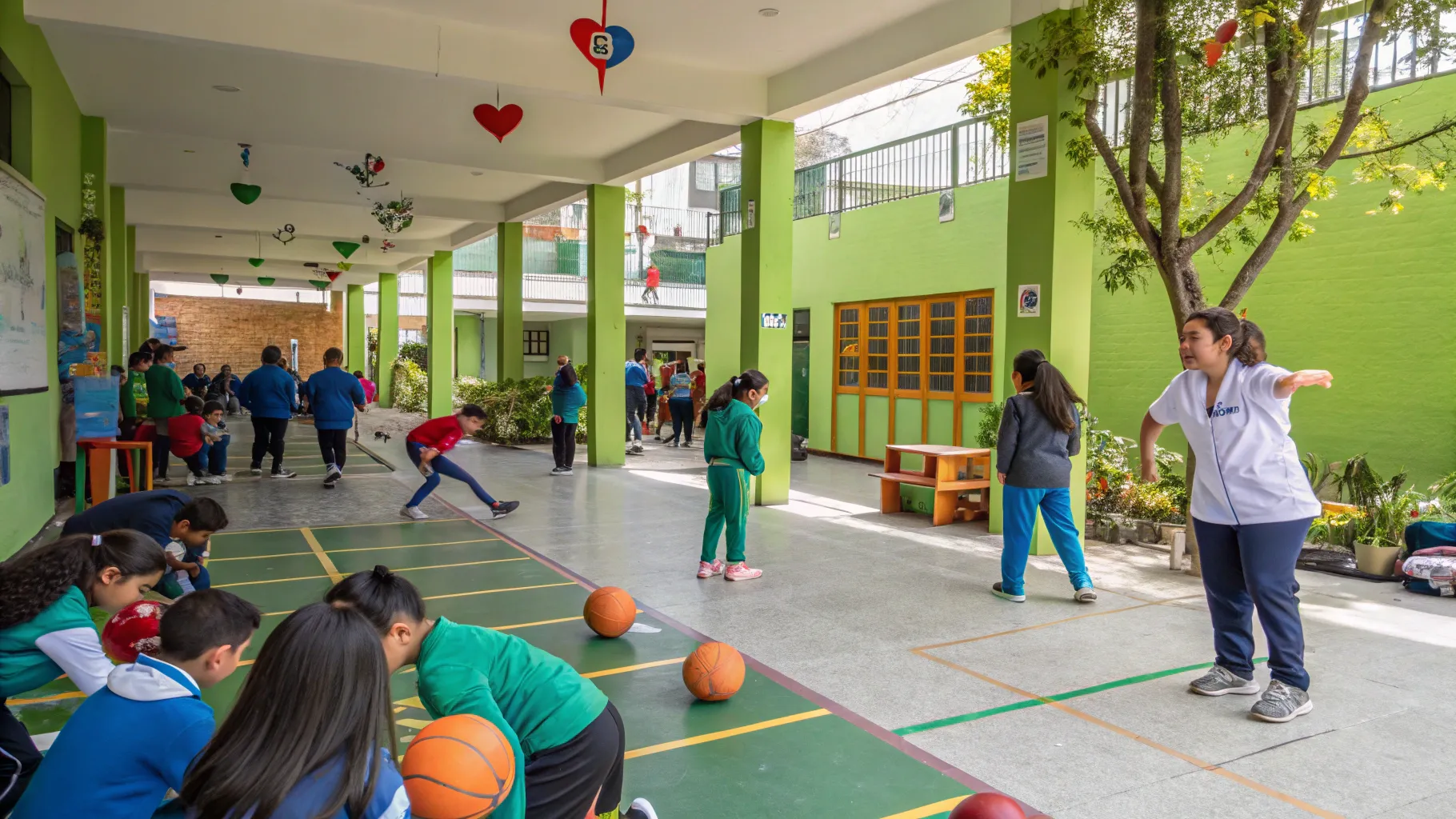
One of the most significant projects in which SOCHIESE is involved is the promotion and support of the so-called “60-minute law” for daily physical activity among students. Chile currently faces a growing challenge: high rates of childhood and adolescent obesity, sedentary lifestyles, and chronic diseases associated with being overweight, such as hypertension and diabetes at an early age.
The law does not seek to increase the number of physical education class hours, but rather to encourage children and adolescents to engage in at least sixty minutes of daily physical activity, which can be integrated in various ways throughout the school day. This includes everything from active recess and dynamic classes that incorporate movement to extracurricular activities that promote holistic health.
"This law mandates sixty minutes of daily physical activity for schoolchildren, which does not simply mean increasing physical education classes, but rather requires a minimum of sixty minutes of daily physical activity."
The approach is flexible and sensitive to the country’s diversity, taking into account differences in infrastructure and resources across school communities. Thus, it recognizes that not all schools have indoor gyms or sports fields, so physical activity must be adapted to the actual conditions of each setting.
What is the role of the school nurse in implementing this law?
The school nurse is key to identifying the specific needs of each school community and managing the actions needed to comply with this law. Being on-site, they can identify opportunities to promote physical activity adapted to local conditions, whether through active recess, extracurricular activities, or innovative teaching methods.
This strengthens the link between health and education, making physical activity an integral part of the school day rather than just an isolated subject.
The presence of school nurses is key to diagnosing and managing these activities, as they understand the specific needs of each school community and can develop strategies that effectively integrate health and education.
Why is this law essential for school health in Chile?
- It combats a sedentary lifestyle: In an increasingly digital world, children spend more time in front of screens, which reduces their physical activity.
- Prevents chronic diseases: Childhood obesity is linked to hypertension, diabetes, and other health issues that were once seen only in adults.
- Promotes equity: Currently, access to physical activities is unequal; this law seeks to level the playing field for all students.
- Strengthens overall well-being: Physical activity not only improves physical health but also mental health and academic performance.
Redefining the Role of Nursing Globally: Implications for School Health in Chile
Nursing is undergoing a period of profound redefinition. Recently, the International Council of Nurses, which brings together more than 130 nursing societies worldwide, published a new definition that broadens and empowers the role of the nurse. It is no longer limited to direct patient care but encompasses educational, preventive, care, and management dimensions.
This conceptual shift is particularly relevant for school health in Chile, where the school nurse plays a strategic role that goes beyond direct nursing care to become a promoter of healthy behaviors, a manager of support networks, and a coordinator of strategies that benefit the entire educational community.
"The school nurse not only responds to students’ individual needs but also contributes to collective well-being, promotes healthy environments, and reduces gaps in access to essential services."
This comprehensive approach means that the school nurse supports both chronic and acute conditions, facilitates equitable access to fundamental rights such as education and health, and actively participates in decision-making within educational communities.
The School Nurse as an Agent of Change and Management
Far from being an administrative resource or a purely caregiving role, the school nurse positions herself as a leader and builder of healthy and equitable communities. She participates in school boards, collaborates with administrators, teachers, and families, and contributes to designing policies and practices that promote holistic well-being.
This multidimensional profile aligns with international trends and evidence showing that countries with school nurses have observed significant improvements in student health and performance, as well as a reduction in social disparities.
This redefinition recognizes that nursing is not just about direct patient care, but encompasses four fundamental dimensions: care, prevention, education, and management. This means that the school nurse not only addresses specific cases but also promotes healthy behaviors, performs early detection of problems, manages resources, and coordinates support networks within the school community.
In the school context, this strategic vision positions the nurse as a key agent in building healthy and equitable educational environments, where health and education intertwine to enhance collective well-being.
How does this new definition impact the daily practice of school nursing?
The school nurse becomes the bridge between the school, the family, and the health system, supporting students with chronic or acute conditions and promoting equity in access to health services. In addition, they actively participate in decision-making within the educational community, contributing their expertise to generate positive and sustainable changes.
SOCHIESE’s Featured Projects and Activities: From Cardioprotection to Continuing Education
SOCHIESE is not only dedicated to advocacy and policy influence but also promotes concrete projects that directly impact Chilean schools. One of these is the “Cardioprotected School” program, which was created in response to a law requiring schools with more than 500 students to have automated external defibrillators (AEDs).
But the law isn’t just about purchasing a device; it requires that the school community be trained to use it effectively, in conjunction with cardiopulmonary resuscitation (CPR). For this reason, SOCHIESE partnered with Zoll, a brand specializing in defibrillators, to educate teachers, students, and school staff on the use of these life-saving tools.
In September, Prevention Month, SOCHIESE nurses will visit schools in the Metropolitan Region to train 11th and 12th graders in CPR and the use of defibrillators—an initiative that not only saves lives within the school but also has a positive impact on the community and the students’ families.
Continuing Education and Support Networks
Being part of SOCHIESE offers nurses a space for ongoing professional development, the exchange of experiences, and participation in scientific conferences. Each month, the association organizes clinical meetings with experts who address relevant topics such as epidemiology, vaccination campaigns, and community health. This space strengthens professional development and collaboration among colleagues, creating a solid network that multiplies the impact of school nursing in Chile.
A Call to Nurses: Building School Health in Chile Together
SOCHIESE extends an open invitation to all nurses working in various educational institutions to join this community committed to a country where every school has a nurse. The association offers:
- Representation before public agencies, ministries, and scientific societies.
- Advice and support to address specific challenges in diverse regions.
- Opportunities for training, research, and participation in innovative projects.
- A space to share knowledge, experiences, and strengthen professional ties.
We believe that school nursing plays a fundamental role in building a healthier and more equitable future for Chilean children and adolescents, and that together we can transform schools into spaces where health and education intertwine to foster fulfilling lives.
School Health Chile... in Motion
SOCHIESE’s history and present show us that school health in Chile is a growing field, with committed professionals who are redefining their role to respond to current challenges. From promoting daily physical activity, to implementing cardiac protection projects, to integrating the school nurse as a strategic agent within the educational community, the path is marked by collaboration, innovation, and a human-centered approach.
In a country with geographic and social diversity, school nursing emerges as a vital bridge to reduce gaps, promote equity, and support children and adolescents in their holistic development. SOCHIESE, with its history spanning more than three decades, continues to be a beacon of inspiration and action for those who believe in a more inclusive and active school health system in Chile.
Frequently Asked Questions (FAQ)
What is SOCHIESE and what is its main objective?
SOCHIESE is the Chilean Society of School Health Nursing, a group of nurses and related professionals who seek to promote holistic health in Chilean schools by advising schools, collaborating with ministries, and working to ensure that every school has a nurse.
What is the 60-Minute Physical Activity Law?
It is an initiative that aims to have students engage in at least sixty minutes of physical activity daily, which can be through active classes, dynamic recess periods, or extracurricular activities, with the goal of combating a sedentary lifestyle and improving physical and mental health.
What is the current role of the school nurse according to the new global definition?
The school nurse plays a multifaceted role that includes direct care, prevention, health education, and management, promoting healthy environments and acting as a coordinator of support networks within the educational community
Frequently Asked Questions about SOCHIESE
- What is SOCHIESE and what is its main function?
SOCHIESE is the Chilean Society of School Health Nursing, an organization that brings together nurses from across Chile to promote and improve health in schools, advising schools, collaborating with ministries, and participating in public policy. - What is the importance of the school nurse within schools?
The school nurse not only addresses healthcare needs but also promotes prevention, health education, and resource management, serving as a vital link between the school, the family, and the healthcare system. - How does SOCHIESE help implement the law on defibrillators in schools?
SOCHIESE supports training in cardiopulmonary resuscitation and the use of defibrillators for students, teachers, and the school community, ensuring that the law is not only complied with in terms of equipment but also in terms of training and preparedness. - What benefits does SOCHIESE offer its members?
In addition to advocacy and continuing education, SOCHIESE offers consulting services, access to research, participation in conferences, and a professional community that shares experiences and knowledge to strengthen school nursing in Chile. - How can I join SOCHIESE?
If you are a nurse interested in school health, you can contact SOCHIESE to learn about the benefits of being part of this association, participate in its activities, receive continuing education, and contribute to improving school health in Chile.
School health in Chile is undergoing a transformation that opens new possibilities for children and adolescents to experience their school years with greater opportunities for physical, emotional, and social well-being. The Chilean Society of School Health Nursing (SOCHIESE), led by dedicated professionals such as Nuri Sada Aznar, is a key player in this change. From its humble beginnings to its participation in national and international projects, SOCHIESE promotes initiatives that connect health and education in innovative and humane ways.
School nursing, with its expanded and strategic role, proposes a model where prevention, education, and management come together to create healthier, more active, and more equitable school communities. Projects such as the “Sixty Minutes Law” and cardiopulmonary resuscitation (CPR) education are clear examples of how school health can be a holistic experience, adapted to diversity and the real needs of each setting.
If you’d like to learn more about scientific societies and school health in Chile, we invite you to visit VISIBLES WORLD MAGAZINE—News from Chilean and International Scientific Societies, where you’ll find up-to-date information on SOCHIESE and other organizations dedicated to health and education.
You can also learn more about the partnership between SOCHIESE and SOCHIPE to promote school health in Chile and the pilot programs they are developing on this page: SOCHIESE and SOCHIPE Partnership to Promote School Health.
The invitation is open for more nurses and health professionals to join this network that is making a difference, building a Chile where school health is a tangible and enriching reality for everyone.


