Workitfy Summit: The Remote Work Revolution and the Keys for 2025
An event that brought together leading voices in remote work, digital nomads and tourist destinations.


Workitfy Summit
Redefining the Future of Work and Flexible Living Imagine a world where the office is no longer within four walls, where the Caribbean sunsets of the Riviera Maya can be your daily view while you drink your favorite coffee and manage your projects with another way of living your life; that is exactly one of the proposals that makes you dream and that, through the Workitfy Summit event, seeks to make it real, an event that challenges the traditional paradigms of work, welcoming us to an era of work freedom and flexible living (and it is not only for entrepreneurs or digital nomads).
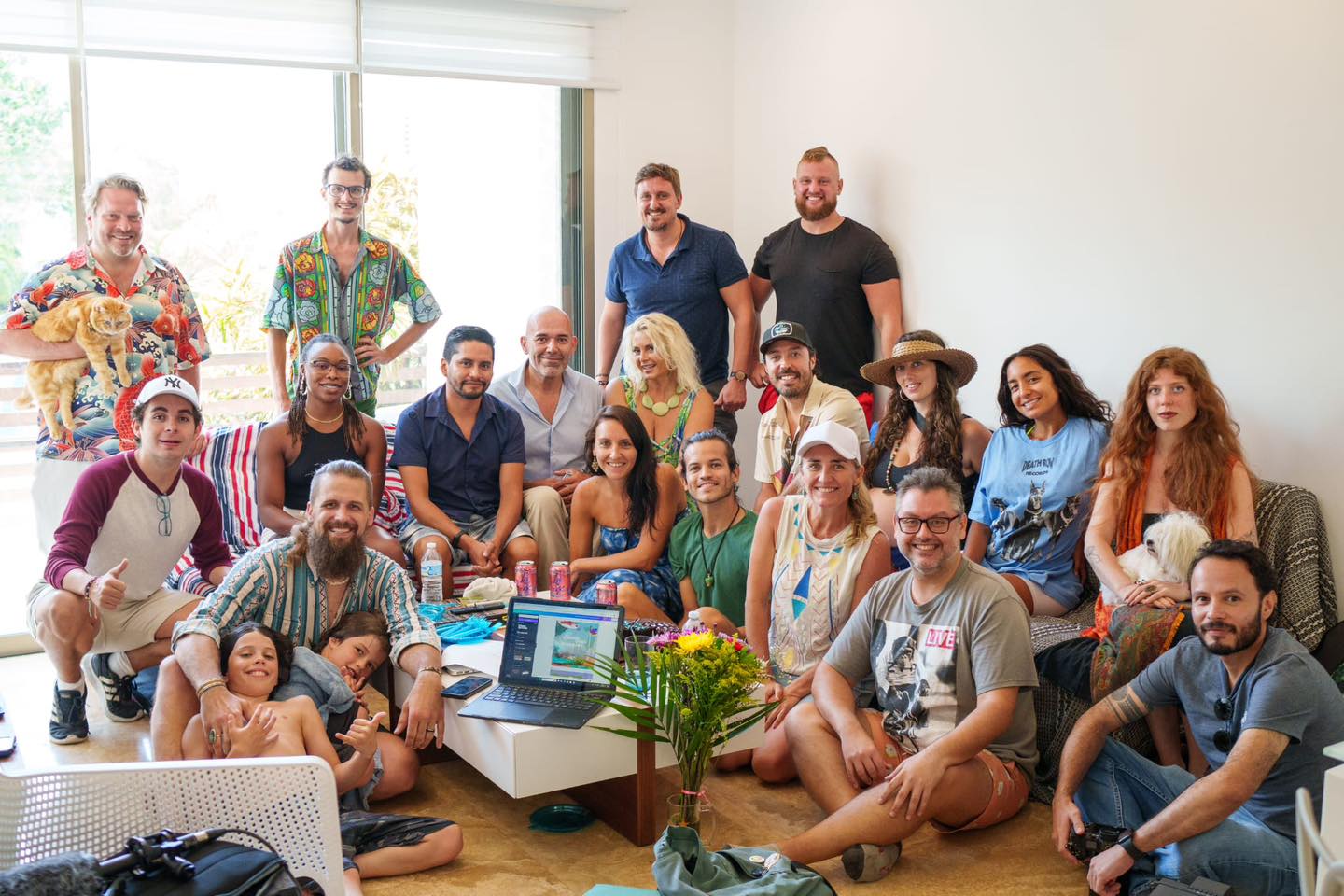
Estefanía Gelroth, founder of Workitfy, led this successful virtual gathering held in October 2024 and revealed that in March 2025 it will be held in person; the online event, for its part, was the stage where companies, professionals and the tourist-destinations sector came together to evolve the way we share with others through our talents (what we commonly call working); the event rethought from where we do it, whether from the routine of what we learned by repetition or perhaps from the beating of the heart, to dare to live their dreams and make them real through methodologies, expert advice and many more surprises that this event had.
As its founder announced, in March 2025, the event will come to life in person.
Geltorth told us that: "Humanity has gone through several revolutions: from the agricultural era to the industrial era, and we are currently going through the beginnings of an unprecedented technological era"... and obviously, Workitfy is on that path and proposes a new leap: a model where work is no longer tied to fixed schedules or static locations. The event that connected companies, professionals and tourist destinations in one space explored the integration of technology with a balanced life, supporting both financial and work freedom.
The purpose is clear: Workitfy has been designing a methodology for some time that redefines remote work as a full life experience, combining the best of technology and personal freedom. The main players? Business sectors, independent professionals and the world of tourism. All with a key role in the creation of a future.
A panoramic view toward the future of remote work
We had the opportunity to talk with some of the speakers who shared their ideas and perspectives; below we present a glimpse of the trends, challenges and opportunities in this work paradigm that we are only just beginning.

Carles Navarro
He presented: The keys to digital entrepreneurship.
Carles Navarro, creator of vivedistinto.com, has set out to show the world that there are multiple ways to live and undertake. With a diverse background that includes photography, computing, advertising and marketing, as well as experience as a mentor and entrepreneurship teacher, he has managed to become a benchmark in the world of digital nomadism. Among his most notable achievements, Navarro has reached financial freedom and positions himself as one of the main references in the Spanish-speaking sector through his popular podcast Nómada Digital. He has published three books and has spent six years traveling the world, using various means of transport, from a van to a motorcycle, and experiencing life as a backpacker. Through his mentoring, Navarro helps entrepreneurs reach their goals. He has also founded the Alternatribu community, a space in which new ways of living in the digital era are explored and practiced. Navarro makes himself known through his podcast, interviews, his YouTube channel and his books. He is currently developing new projects in Costa Rica, where he is investing and expanding his vision of an alternative lifestyle.
How do you envision the future of digital entrepreneurship in a world where flexibility and remote work are increasingly common?
"The ability to be flexible in creating new businesses is crucial in a rapidly changing world. Flexibility allows you to adapt to new trends, technologies and consumer behaviors, which is vital to remaining competitive and relevant in the market. In an environment where disruption is the norm, the capacity to adjust strategies, business models and products in an agile way can make the difference between success and failure."
What importance do you give in the future to the ability to be flexible when generating new businesses as the world changes rapidly?
"I see flexibility as a combination of an open mindset, constant innovation and operational agility. To manage it, it is important to foster a good culture within the organization that values experience and learns quickly from mistakes. It also involves keeping lightweight processes that allow quick adjustments and always maintaining a customer-centered focus, understanding their changing needs."
How do you see and manage flexibility?
"In practice, I manage flexibility by keeping small, multifunctional teams, using real-time data analysis tools to make informed decisions, and adopting agile methodologies that allow us to iterate and quickly adjust the value propositions according to market feedback."

Carles was in the first panel, Entrepreneurship and digital nomadism: see recording

Lina Zarta
He presented: Professional redesign for the future of work: Reskilling and upskillingLina Zarta, CEO of Synergy Partners SAS, is a professional in Business Administration with a specialization in Transpersonal Psychology, Breathing and Transpersonal Meditation. Her focus has been to combine personal development with business dynamics to optimize human resources, enhancing people's professional growth through methodologies centered on Being.
Among her most notable achievements, Lina has developed the Roble en Empleabilidad Consciente methodology, a key tool in improving employment opportunities. In addition, she has led Synergy Partners for 14 years, consolidating an interdisciplinary team that offers effective solutions for companies' Human Resources departments.
The services she offers include personalized advice in Conscious Employability, effective personnel selection processes, and consulting for the development of competencies and skills of collaborators. Her focus on personalized attention and commitment to results make her proposal unique.
Currently, Lina and her team are working on the promotion of an Ebook that offers strategies to manage work stress and face changes in the business environment, providing practical tools for well-being at work.
What are the most critical skills that professionals must develop to be competitive in an increasingly digital and remote labor market?
"In an increasingly digital and remote labor market, the skills that professionals must develop go beyond the technical; it is a combination of abilities that range
from technology to emotional intelligence. From my conscious-employability approach, I consider that there are three key blocks: technical, interpersonal and adaptive skills, which allow not only to carry out the work efficiently, but also to connect with a deeper sense in what we do.
As for technological skills, although I am not an expert in this field, it is crucial that any professional review their competence in digital tools such as Slack, Zoom or Microsoft 365, essential for virtual collaboration. In addition, cybersecurity and data management are areas where we need to gain fluency in order to work safely and efficiently.
Self-management and discipline are fundamental in the remote modality: knowing how to prioritize, being proactive and flexible in the face of change are competencies that allow us to adapt quickly in a constantly evolving work environment.
Finally, virtual collaboration, resilience and stress management play an important role in this scenario. Working in distributed teams, managing the balance between personal and professional life, and developing solid emotional intelligence allows us not only to survive in remote work, but to thrive in it.
What benefits do you envision from integration in the field of employability with disciplines such as:
emotional, psychological therapy sessions and work-related astrology?
From my conscious-employability approach, I see great benefits in integrating disciplines in the field of professional development and human resources.
This trend, which is gaining strength in various countries, reflects a growing need to address the human being in an integral way, recognizing that emotional and psychological well-being is key to performance and professional growth.
On the one hand, disciplines such as emotional therapy sessions and Transpersonal Psychology allow greater self-knowledge and the management of emotions.
When a professional is aware of their unconscious patterns and how these influence their decisions, they can better align their working life with their values and purposes.
On the other hand, work-related astrology provides a novel perspective to identify natural talents and strengths, helping to orient professional decisions in a more
intuitive way.
This approach can facilitate making decisions more aligned with the sense of personal and professional life, which in the long run translates into greater satisfaction and commitment at work.
Finally, the integration of these disciplines in the organizational field has evident benefits, such as the reduction of stress, the improvement of interpersonal relationships and the creation of a more positive and productive work environment.
Companies that adopt a more holistic approach to the development of their collaborators not only attract talent, but manage to create more cohesive, innovative and committed teams.

Lina was in the sixth panel: Companies and remote workers: see recording

Nausica Riccio Puente
She presented: How to create organizational cultures in remote and hybrid companies: Strategies to maintain organizational efficiency and team cohesion.
Nausica Riccio, founder of GoBlend, is a reference in the implementation of hybrid work models. With more than 24 years of experience in the field of Human Resources and as a certified coach, she has been one of the first to comprehensively address work hybridization in Spain, helping companies adapt to the new ways of working effectively.
Nausica has a solid academic background that includes a degree in Psychopedagogy from the University of Barcelona and several master's degrees in Human Resources, Coaching and Emotional Intelligence, and Business Administration. In addition, she holds a certification in Hybrid Forms of Work from Rebel Talent, which positions her as an expert in this emerging field.
Throughout her career, she has been key in the creation and management of HR departments, as well as successfully leading digitalization processes and organizational changes toward hybrid models in Spanish companies and those of other countries.
Currently, she is developing e-learning training programs on remote and hybrid work, as well as new personal and group coaching initiatives to improve the balance and well-being of employees in hybrid environments.
With the advance of remote work and hybrid models, how do you think this paradigm shift is affecting traditional organizational cultures, and what deeper transformations do you consider indispensable for companies to remain competitive in the face of this future?
2020 was the year in which companies dealt with and worried about digitalization, and at that moment remote work was understood as a technical challenge. Once overcome, with everyone already hyper-connected and operating efficiently from home, 2021 presented itself as the year of the organizational challenge: the maximum concern then was how to organize shifts so that on-site work was combined with remote work as if it were a puzzle. The result? Thousands of shared Excels where each one marked when they were going to be teleworking and just as many attempts to find the squaring of the circle.
The CEOs at that moment were worried about finding the perfect hybridization formula, the one that would balance on-site and remote work without compromising business productivity or the well-being and expectations (almost demands) of employees. And the dance began: "Formula 3/2, 2/3, 4/1, fully flexible, compressed shifts, accumulable, geographically limited…?
2022 arrived, and with technology now operating at full capacity (more or less) and with shifts organized, CEOs and functional directors realized that the challenge of hybridization was not solved solely with technology and teleworking shifts, but that something more was missing in the equation that they had neglected until then. And this something was the training of managers to align ourselves with a new organizational culture. It is then that training began to be demanded on: how to hold effective remote meetings, how to be a good leader from a distance, how to maintain the motivation of a hybrid team, etc.
However, as usual, training is not the solution. Or, at least, it is not the only solution nor the most important one. The key to hybridization lies in considering it as what it really is: a change of mindset, a change of organizational culture and values that cannot neglect something as important as purpose. It has been many hours working side by side with these CEOs and their management line until getting them to understand that the most important thing, before deploying a hybridization process, is to understand what it wants to be done for. If the answer concerns motives external to the organization itself (health, competition, attracting talent, external image), the purpose is not intrinsic, therefore, it will not be valid by itself.
For a purpose to truly be one, it must be linked to motives inherent to the organization itself. For example: "We want to hybridize because our purpose involves caring for the well-being of our people" or "We want to hybridize because we know we can be more efficient by doing so" or "We want to hybridize because we intend to implement a culture of freedom and autonomy" or so many others.
Therefore, the deep transformations move away from technological or operational issues and pass through much more intangible and complex concepts:
what is our purpose of hybridization?, is our organizational culture prepared to hybridize?, are our current values aligned with the values necessary to hybridize successfully?
This is the first step to hybridize in a conscious and efficient way. When this point is worked on and covered, the rest can be worked on.
which actors or arguments influence the organizational culture?
Organizational culture is one of the most complex issues at the business level, because it cannot be made tangible, nor touched, nor measured, but it exists constantly and in every action, decision and person that form part of the organization.
The culture is formed by all the people who interact in the business ecosystem, therefore we are going to consider as actors all the employees, both internal and external. Diversity is one of the burning topics of the present, since some companies experience it as a stopper, while others have understood that it is a source of added value that can provide countless advantages, among them, competitive advantage, which is always one of the maximum concerns.
Different generations (generation X, boomers, millennials, centennials…), different cultures, ages, genders, ideologies, etc. And all of this represents a limitless well of value, since diversity allows optimizing the collective intelligence of teams, enhances creativity, innovation and maintains a healthy, dynamic climate prepared to take on challenges and changes. Therefore we are all actors, we are all important no matter the position we hold, and we have to be prepared to accept that the new generations have a lot to teach us, and we must be willing to learn.
Finally, to work the organizational culture, especially in remote and hybrid environments, it is necessary to get down to work.
A couple of years ago, at a round table on hybridization to which I was invited, a renowned HR director of a company known by all stated the following: "Working culture, values and team spirit remotely is almost impossible". I contradicted him immediately: "It is not at all impossible, what happens is that it has to be done in a way different from what we are used to". Before the pandemic, the organizational culture was forged at the coffee machine, in the canteen, in informal meetings in the hallways, in that "do you have 5 minutes?" when passing by a colleague's desk. And also in asking your colleague across from you how the weekend went and in making a spontaneous query to your boss, sitting a couple of desks further over.
With distance and the remote, this changes. The countless informal moments that arise in the day-to-day at the office are adaptable; and they can be translated and implemented in a different way.
And the key is that you have to think about it and act in an intentional and deliberate way on decisions and actions that previously were not necessary because they arose spontaneously. That is the only difference: it is necessary to allocate time and resources, because these things do not happen on their own. Therefore, it is not a matter of incapacity, but of intentionality.
Numerous full and remote companies, which were already born remote and never had on-site presence, have solid and well-worked cultures. Of course, this has not happened by spontaneous generation, but as the fruit of effort and dedication.
Therefore, culture must be worked on just as marketing or finance plans are worked on.

Nausica was in the second panel, Companies and remote workers: see recording

Ilan Cohen
He presented: Tools and methodologies to create distributed work teams - Success case.
Ilan Cohen is the CEO of Bindiva, an intelligent-content agency specialized in marketing and public relations with reach across America. With a background in communication, in addition to being a photographer and artist.
One of the most notable milestones has been the creation of his agency with 14 years in the market. Another important achievement has been his photographic exhibition Viaje a la Profundidad de la Luz, where he explores the connections between light and visual depth.
With distributed work redefining the way organizations operate, what impact do you think this model has on innovation and how can companies make sure not only to adapt, but to lead in this transformation?
The home-office model helps to increase quality of life and to make times in a job more efficient by removing all non-essential activities such as commutes, in-person meetings, traffic, etc... An efficient home-office model focused on results helps collaborators to focus their energy on the results and on the actions that will lead to them.
How to establish a healthy limit between companies that follow a certain traditional model and the new generations (post-millennials) who have another approach to seeing and living life?
"Each company must find the work model that best suits it and is most efficient for its activity and line of business, in addition to taking care of its organizational culture, which is why each company must generate alliances and activities according to its line of business and its culture, using the tools that technology provides".

Viaje a la Profundidad de la Luz, photographic exhibition.
Ilan was in the fourth panel, Companies and remote workers see recording
Mauro Guevara
He presented: Digital-nomad-friendly destinations: What are they? What do they offer? Why do they emerge and consolidate? The case of NomadBA.
How is the concept of work and of enjoying through travel changing? and what role do destinations that position themselves as 'digital nomad friendly' play in this new paradigm?
In many respects, work has undergone a process of flexibilization (even before the pandemic) by calling into question what I consider the old paradigm of "Control" over employees, which forces, for example, complying with a fixed schedule regardless of the work objectives. In that sense, the change begins by thinking of work based on "objectives to be carried out" within certain deadlines, over and above fulfilling some stipulated hours. This allowed, for example, having permitted teleworking days during the week (usually Fridays).
With the pandemic and the forced change of having to leave the office, a teleworking boom was experienced and many of us had to adapt to move to a totally remote environment. This allowed many company leaders to think of their teams from a distributed logic, as a way to optimize times (with the saving of the round trip to and from the office) and also to lower fixed costs (such as office rent, for example). This flexibilization of work generated a rearrangement of the daily routine in favor of people: it was no longer necessary to go downtown to the office every day, I can work from home or from anywhere where I have an internet connection. This social rearrangement impacted many facets of life, of which tourism is one of them. In general, social phenomena are pursued "from behind" by public policies, and digital nomadism is no exception. The concept of digital nomad begins long before the pandemic (some mention that the term arises in the middle of the 2010s decade), the pandemic only accentuates it and, with it, the popularization of the term "digital nomad" and its consideration as a new type of international visitor by destinations.
As we mentioned, being a very recent phenomenon, it is not easy to put together a program that appeals to the end user. From my perspective, it is important to think public policy from the feet of the final recipient: being able to understand first who they are, what they are looking for, what motivates them to get to know different places, which are the networks from which they seek information and, finally, how to bring the city closer to these new visitors. In that sense, which of everything the city has to offer can be of interest to them. Finally, it is important to be able to know the local ecosystem of services that this audience consumes, thus including the private sector in order to put together a holistic product.
The digital nomad is a type of visitor who invests a lot of energy in moving around but who, unlike an average tourist, does not have 100% of leisure time because they also have to fulfill their work obligations. So, a nomad-friendly destination is a destination that speaks in the code of this audience and that can bring the city closer with its private ecosystem, in an easy and clear way to make the landing at the destination as smooth as possible.
Do you think embassies need to integrate more in the area of tourism promotion?
It is very important that embassies and consulates be integrated into tourism promotion. In the first place, because they are the source of information on the ground of the migratory information that the visitor must have when planning a trip to the destination. Secondly, because from their commercial perspective, they are the ones who have the map of public and private actors of the different countries in which they have representation.
Having surveyed which are the different fairs or conferences linked to remote work in the different countries and being able to participate in them, talking with startups, identifying distributed-work companies is a good first step. On the other hand, organizing events and receptions at the embassy where remote workers and distributed-work companies can be invited and the different destinations in the country that work the topic can be mentioned is another suggestion that I believe can make the difference. Likewise, identifying the local ecosystem that works with the digital-nomad audience and being able to connect it with the existing ecosystems in the country of origin is another good way to generate visibility of the country as friendly for digital nomads.
Mauro was in the fourth panel, Entrepreneurship and digital nomadism see recording
Daniel Villareal
He presented: Discover how AI drives change in business.
How do you adapt your daily working life with artificial intelligence, in a non-invasive way?
"I like to think of AI as my invisible dance partner on the work floor.
I don't want it to take me over completely, but I do want it to help me move with more grace and efficiency. For example, every morning, my 'AI DJ' mixes a playlist of news relevant to my industry. While I drink my coffee, I listen to this 'informative remix' that brings me up to date in minutes.
Then, when I need a burst of creativity, I use AI as my 'crazy-ideas machine'. I tell it: 'Surprise me!' and it returns concepts that would never have occurred to me. It is like having an improv partner always willing to play.
For data analysis, AI is my 'quantum magnifying glass'. It helps me see patterns in oceans of numbers that my human eyes would overlook. It is like having data-detective superpowers. I even use AI to polish my emails.
It is like having a personal style editor who assures me that I am not sending confusing or boring messages.
The fascinating thing is that all of this happens in the background. AI does not invade my space; it simply amplifies my capabilities.
It is like having an invisible assistant who subtly improves every aspect of my work without stealing my spotlight. At the end of the day, I am still the one who makes the decisions and provides the human touch. AI is my copilot, not my replacement. And that is what makes this collaboration so exciting and productive."
Daniel was in the second panel, Entrepreneurship and digital nomadism see recording

Produced, in collaboration with Workitfy, by:
Creative Communicator and Graphic Design Professional.
CEO Visibles.World
I help you become visible and connect with people to strengthen your communication and increase the bond with your audience through creativity and from an integral perspective of knowledge based on my career.
Create a job you love
Join Estefanía, her team and the Club Workitfy partners in discovering:
Strategies to identify and transform limiting beliefs, those that keep you trapped in a boring job, that does not take advantage of all your talents and also stresses you.
* Practical tools to discover the key to creating a job you love.
* Techniques to communicate and expand your value proposition, impacting more people with your unique and valuable essence (the one the world is waiting for through you).
This masterclass is aimed at: Professionals dissatisfied with their current job, People looking for a change within their profession, wishing to work with purpose and passion, and those who understand that work paradigms have changed and want to take advantage of the new opportunities.
Do you want to know more about....?
Share and enjoy this content: